.png)
.png)
Asphyxiated Skin: The Reason Your Skin Is Dull, Tight and Oily at the Same Time

Skin that feels dry and rough on the surface but still breaks out and shines underneath isn't "combination skin." It's asphyxiated — and Korean skincare fixes it better than anything else on the shelf.
You cleanse. You moisturise. You've maybe even added a richer cream because your skin feels so tight. And somehow it keeps getting worse — duller, rougher, more congested, with tiny bumps under the surface and an oily shine by midday that makes no sense for "dry" skin.
There's a name for this, and skin therapists have known it for decades.
It's called asphyxiated skin.
And once you understand what's actually happening, fixing it becomes surprisingly simple.
What Is Asphyxiated Skin, Really?
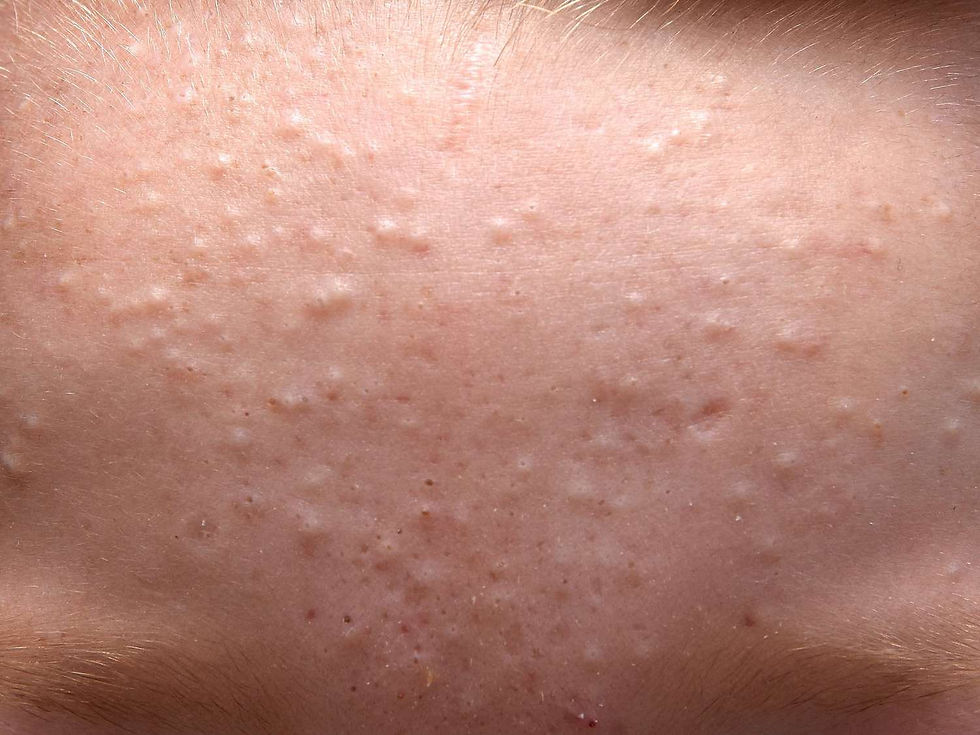
Asphyxiated skin is a paradox: dehydrated and tight on the surface, oily and congested underneath.
Here's the mechanism. The skin is producing plenty of oil — but that sebum has become thick and waxy, and instead of flowing out and over the surface, it gets trapped in the pore. Dead skin cells build up on top (a thickening called hyperkeratosis), the trapped oil hardens, and you're left with blackheads, enlarged pores, little grain-like bumps under the skin (milia), and a complexion that looks grey, matte and tired no matter how much sleep you got.
Meanwhile the very surface is starved of water — so it feels tight, rough and flaky. Oily and dehydrated at the same time.
That contradiction is exactly why asphyxiated skin is so often misread as ordinary combination skin, and treated with completely the wrong products.
"My Skin Can't Breathe" — The Truth Behind the Name
The word asphyxiated comes from that suffocated, can't-breathe feeling. It's a vivid description — but let's be precise, because it changes how you treat it.
Your skin doesn't actually breathe from the air. The living layers get their oxygen from your blood supply, not from your pores, so no product is literally "suffocating" your cells.
What's really going on is congestion, dehydration and a compromised barrier — the surface is so blocked with sebum, dead cells and product residue that it can't shed, renew or hold water properly.
So the fix isn't to "let your skin breathe" by stripping everything off. The fix is to unblock and rebalance it — clear the congestion, restore the water, and stop feeding the cycle. That's a completely different strategy, and it's where Korean skincare quietly outperforms everything else.
How to Know If Your Skin Is Asphyxiated
You're likely dealing with asphyxiated skin if you recognise a few of these:
Your complexion looks dull, grey or sallow even when you're well rested.
Skin feels tight and rough to the touch, but turns shiny and oily by the afternoon.
You have blackheads, enlarged pores and small bumps under the skin that never quite come to a head.
Makeup sits on top and never seems to "sink in."
You've been reaching for richer, heavier creams because of the tightness — and it's only getting worse.
What Causes It
Asphyxiated skin is almost always something we do to the skin, not something we're born with:
Incomplete cleansing — sunscreen, makeup and daily grime left behind to build up overnight.
Heavy, occlusive creams on oily skin — rich formulas that trap the very sebum that needs to escape.
Harsh, stripping cleansers — they dehydrate the surface and trigger more oil in response.
Environment — and in Cape Town we get the full set: strong sun, wind, dry air and city pollution all working against the skin.
Dehydration — not drinking enough water, plus a surface that's lost its ability to hold moisture.
The Mistake That Makes It Worse
Most people respond to asphyxiated skin in one of two ways, and both are wrong.
They either strip it — scrubbing, harsh foaming cleansers, drying toners — which damages the barrier and pushes oil production even higher. Or they smother it — piling on rich, heavy creams to fix the tightness, which traps more sebum and deepens the congestion.
Asphyxiated skin doesn't need to be attacked or drowned. It needs to be decongested and rehydrated, in the right order.
The Korean Skincare Approach: Decongest, Then Rehydrate
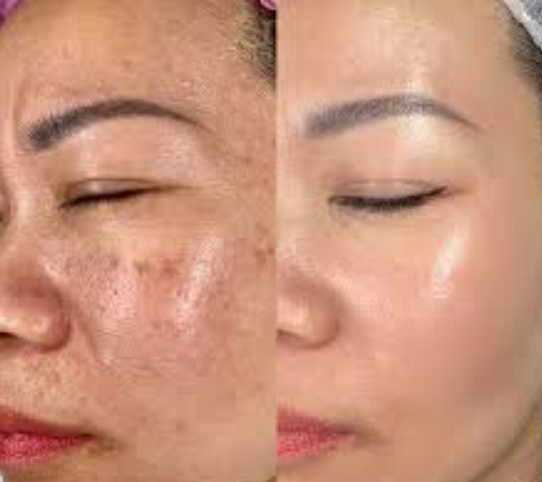
This is the heart of it. Korean skincare treats asphyxiated skin as a state — not a permanent type — and the fix is about sequence and balance, not brute strength. Here's the protocol, and the K2C products that do each job.
Step 1 — Double cleanse, properly
First an oil-based cleanse to melt the thick, trapped sebum, sunscreen and buildup the skin can't clear on its own — then a gentle water-based cleanser that purifies without stripping. This single change resolves more asphyxiated skin than anything else. Reach for the Banila Co Clean It Zero Pore Clarifying Cleansing Balm followed by the ETUDE SoonJung pH 6.5 Whip Cleanser.
Step 2 — Exfoliate, but gently and in control
You need to clear the dead-cell buildup and dissolve the hardened sebum inside the pore — but with controlled chemical exfoliation, never harsh scrubs that tear the barrier. The SOME BY MI AHA-BHA-PHA Miracle Toner does exactly this: AHA on the surface, BHA inside the pore, PHA gentle enough to build up slowly. Start a few nights a week and increase as your skin adjusts.
Step 3 — Decongest the pores
Once the buildup is clearing, keep the pores refined and the oil flowing freely with a lightweight decongesting ampoule like the SKIN1004 Madagascar Centella Poremizing Fresh Ampoule — purifying without a hint of heaviness.
Step 4 — Rehydrate with water, not oil
This is the step everyone skips, and it's the one that breaks the cycle. Asphyxiated skin is dehydrated, so it needs water and humectants — not more oil. Layer in lightweight, watery hydration with the I'M FROM Rice Toner and the featherlight repair of snail mucin and Centella. Your skin gets the moisture it's been crying out for, without anything that could re-clog it.
Step 5 — Balance and soothe
To calm inflammation and help regulate oil, a propolis-and-niacinamide serum like the Beauty of Joseon Glow Serum balances the skin beautifully — niacinamide refines pores and steadies sebum while propolis soothes. Finish with a lightweight barrier moisturiser, never a heavy one.
Step 6 — Protect every morning
Sun and pollution are two of the biggest drivers of asphyxiated skin, so protection isn't optional. The Beauty of Joseon Relief Sun SPF50+ shields the skin you're rebuilding — weightless, never greasy, and it won't add to the congestion.
Once a week — a watery, hydrating mask
Skip heavy, oily masks. A watery Etude sheet mask creates a gentle seal that pushes hydration deep into the surface in twenty minutes — exactly what asphyxiated skin needs, exactly the kind built into the K2C kits.
Why a Kit Beats Guessing
The reason asphyxiated skin is so hard to fix on your own is that every single product has to pull in the same direction — decongest, exfoliate, hydrate, balance and protect — without one of them undoing the others. One wrong heavy cream and you're back to square one.
That's the whole idea behind K2C. Every kit is a curated system where every product has a job, sequenced to work together for the exact state your skin is in. No guesswork, no clashing formulas, no piling on more in the hope something works.
Find Your Fix
Asphyxiated skin is a state, not a life sentence — and the first step is reading your skin correctly instead of guessing.
Take the K2C Skin Quiz — 5 questions, 2 minutes — and we'll match you to the exact kit your skin needs to clear the congestion, restore the water, and get your glow back.
korea2capetown.co.za Authentic Korean skincare. Skin state philosophy. Real results — delivered across South Africa.
Love,
Mieke💚

Authentic Korean skincare. Skin state philosophy. Real molecules. Real results — delivered to South Africa.
This article is for general education and isn't a substitute for medical advice. For persistent, severe, or scarring acne, please consult a doctor or dermatologist.


Comments