.png)
.png)
The Real Reason Your Dark Spots Won't Fade (And the Korean Routine That Finally Does the Work)

You've tried the one "miracle" serum. Here's why pigmentation needs a team — not a hero — and exactly how the Pigmentation Correction Kit fades dark spots from four angles at once.
Let's start with the thing nobody selling you a single serum wants to admit:
One ingredient will never fix your pigmentation.
You bought the viral vitamin C. You used it for three weeks. Maybe your skin looked a little brighter, maybe it stung a bit, and then… the dark spots were still there. Sun damage on the cheekbones. The shadow left behind by a breakout that healed months ago. That patch that shows up every summer and never fully leaves.
It's not that the vitamin C was fake. It's that pigmentation isn't a one-ingredient problem — so it was never going to be a one-ingredient fix.
Dark spots, melasma, sun damage and post-acne marks are all the same story underneath: your skin made too much pigment, in the wrong place, and it's holding onto it. To actually fade that, you have to interrupt the pigment process at more than one point — and protect your progress every single morning. Miss a step and you leave a door open.
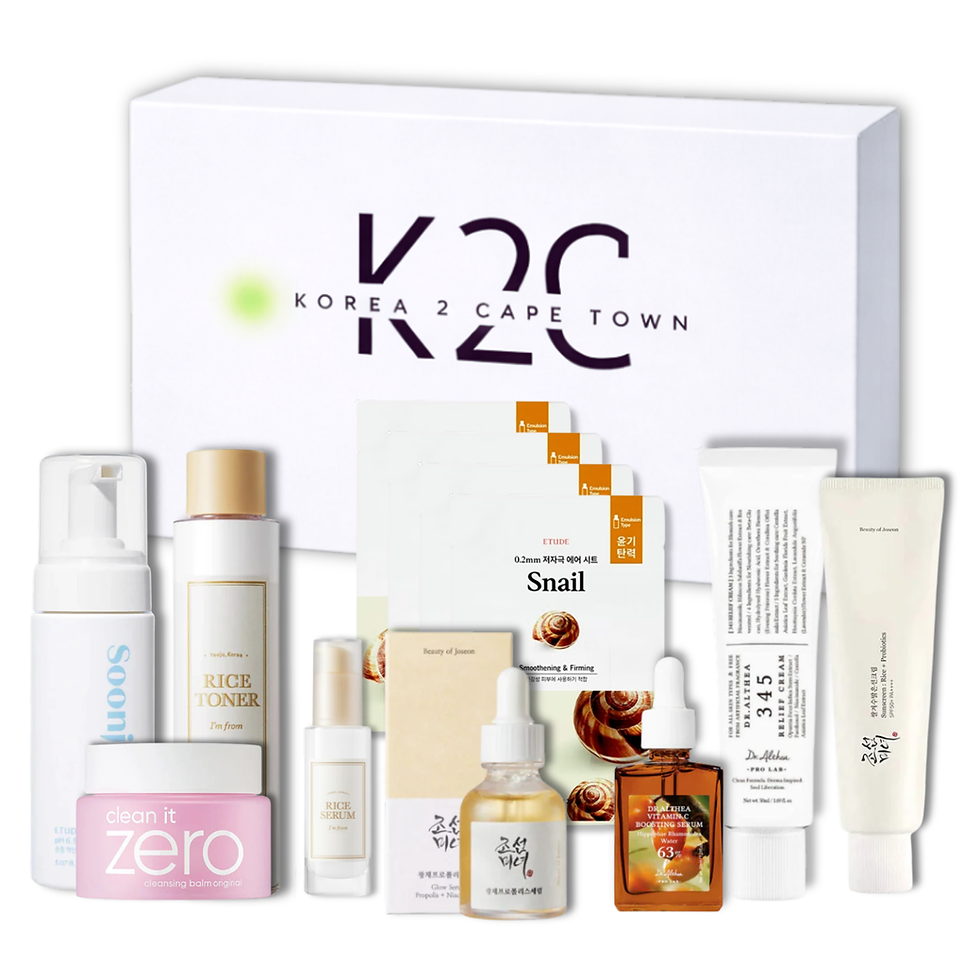
That's the whole idea behind the Pigmentation Correction Kit: a curated Korean system where every product has a job, and no two products do the same job twice. Let me show you how it actually works — because once you understand it, you'll never go back to buying single serums and hoping.
First, Meet the Enemy: An Enzyme Called Tyrosinase
Here's the science, minus the jargon.
Your skin makes pigment (melanin) using an enzyme called tyrosinase. Think of tyrosinase as the factory switch. UV light, inflammation from a breakout, hormones — they all flip that switch on, and the factory starts pumping out pigment. Sometimes it overshoots. Sometimes the pigment clumps in one area. That's your dark spot.
So if you want to fade pigmentation and stop new spots forming, you have to do four things:
Slow the factory down — block tyrosinase so less new pigment is made.
Stop the pigment being delivered — interrupt how pigment travels up to the surface of your skin.
Protect the cells from the trigger — neutralise the UV-driven free radicals that keep flipping the switch on.
Block the trigger itself — wear SPF, every day, no exceptions.
No single product does all four well. A system does. Here's the team.
The Brightening Team Inside the Kit


Rice — the gentle brightener that preps the way
Korean women have used rice on their skin for centuries, and the science has finally caught up to the tradition. The I'M FROM Rice Toner is the first active step in this routine for a reason.
Rice bran is naturally rich in ferulic acid and gamma-oryzanol — antioxidants that both fight free-radical damage and gently nudge tyrosinase to slow down. It also contains inositol and phytic acid, which act as mild, natural tyrosinase inhibitors. Translation: rice starts dimming the pigment factory before your stronger actives even arrive, and it does it gently enough for daily use.
This is the "warm-up" your skin needs. It preps and softly brightens so everything that follows works harder — without irritation.
Niacinamide — the spot-fader that also keeps the peace
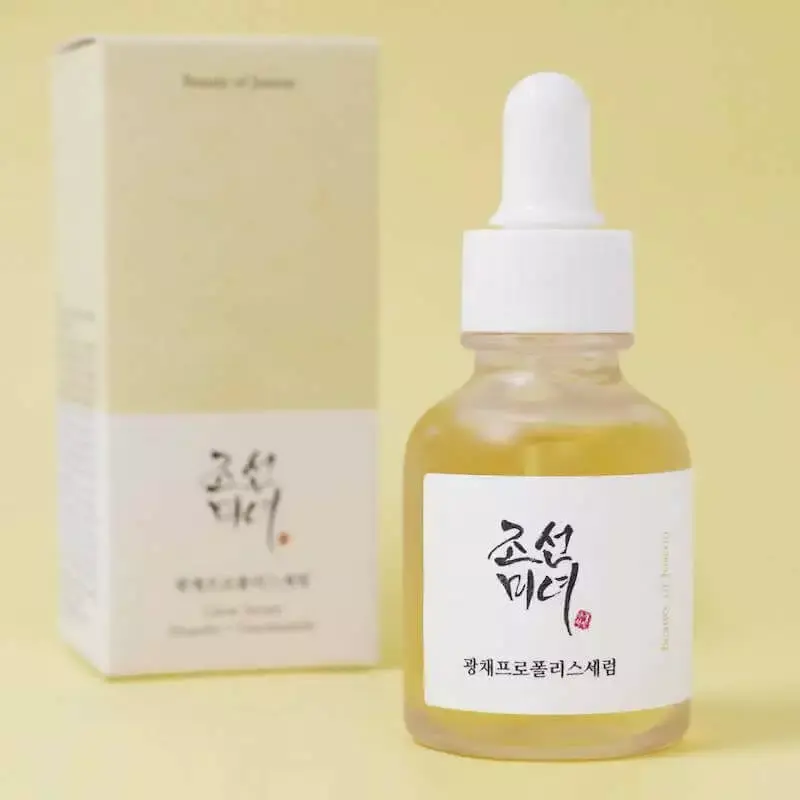
Next comes the Beauty of Joseon Glow Serum, built around niacinamide (with soothing propolis).
While rice and vitamin C work on the making of pigment, niacinamide attacks a different step entirely: it interrupts the delivery of pigment to the surface of your skin. That's exactly why it's so good at fading the stubborn marks left behind after acne — the kind that linger long after the spot itself has gone.
And here's the clever part: niacinamide is also a peacekeeper. Strong vitamin C can sometimes tingle or feel "active" on the skin. Niacinamide's calming, barrier-supporting nature buffers that — so the high-strength step that comes next stays comfortable. Two different pigment pathways, one calmer face.
Vitamin C — the heavy hitter

Now the star most people think they need on its own: the Dr. Althea Vitamin C Boosting Serum (63%).
Vitamin C is one of the most clinically proven brightening actives in all of skincare, and it works on tyrosinase directly — switching down the pigment factory at the source. It's also your skin's most powerful antioxidant, mopping up the free radicals that trigger pigment in the first place.
On top of that, it's a collagen builder, so you get firmer, fresher-looking skin as a bonus.
The reason it failed you on its own isn't the vitamin C — it's that it was working alone, with no rice to prep, no niacinamide to back it up on a second pathway, and (the big one) no daily SPF to protect the results. In this kit, it's finally surrounded by the team it needs.
SPF — the step that decides whether any of it works

This is the part people skip, and it's the part that makes or breaks pigmentation correction. The Beauty of Joseon Relief Sun SPF50+ isn't an optional extra here. It's the whole point.
UV light is the number-one thing flipping your pigment switch back on. Fade a spot all night with actives, then walk out into the Cape Town sun with bare skin, and you've just re-triggered the exact factory you spent money trying to switch off. No SPF, no results. It's that simple.
There's a beautiful bonus, too. Sunscreen on its own only neutralises a portion of the free radicals UV generates — some always slip through.
Your vitamin C, sitting underneath, acts as the backup layer that catches what the SPF misses. The two together protect you better than either one alone.
That's why the order matters: actives first, SPF last, every morning.
Why the Team Beats the Hero
Put it together and you can see why a single serum was always going to lose:
Rice slows the pigment factory and preps the skin, gently.
Niacinamide blocks pigment delivery and keeps the routine calm.
Vitamin C shuts the factory down at the source and erases existing spots.
SPF blocks the trigger and makes the vitamin C work even harder.
Four products. One enemy. Hit from four directions at once, every day — which is exactly how pigmentation actually fades in real life. Remove any one of them and you leave a door open for the spots to creep back. Together, they close every door.
That's the difference between buying ingredients and following a system.
What to Expect
This is correction, not a filter — so give it the runway real results need.
Most skin responds within 4 to 8 weeks: tone starts evening out first, then existing dark spots visibly lighten, and overall the skin looks brighter and clearer. The marks that took months to form don't vanish overnight, but with this routine run consistently — and that SPF worn religiously — they fade, and they stay faded, because you're finally protecting the work you're doing.
Consistency is the secret. Not intensity. Not more products. Just the right system, used every day.
Ready to Fade Those Spots — Properly This Time?
If dark spots, melasma, sun damage or post-acne marks are your skin's current state, this is the routine built for exactly that.
Not sure pigmentation is your main concern? Take the K2C Skin Quiz — a few quick questions and we'll point you to the kit your skin is actually in the state for. We've already done the thinking, so you don't have to.
And if you already know those spots are the thing you want gone — your system is waiting.
Shop the Pigmentation Correction Kit → fade dark spots the way Korean skincare science actually intended.
Love,
Mieke💚

Authentic Korean skincare. Skin state philosophy. Real molecules. Real results — delivered to South Africa.
This article is for general education and isn't a substitute for medical advice. For persistent, severe, or scarring acne, please consult a doctor or dermatologist.


Comments