.png)
.png)
Why Calm Comes Before Treatment: The Skin Barrier Rule, Most Routines Break.

Before you reach for actives, acids or retinol — your skin may need to heal first. Here's the science behind starting with calm, not correction.
There's a moment almost every skincare lover knows. Your skin starts misbehaving — redness, breakouts, dullness, texture — so you do the logical thing: you treat it. A stronger serum. An exfoliating acid. A retinol everyone swears by. A vitamin C to brighten.
And it gets worse.
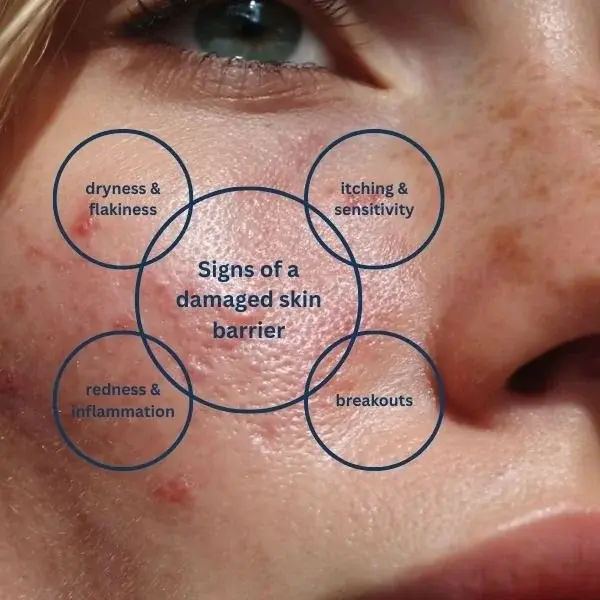
More stinging. More redness. More reactivity.
So you push harder, layer more, and your skin spirals further.
This is one of the most common patterns we see at Korea 2 Cape Town — and it's almost never a product problem. It's a sequencing problem.
Because here's the rule the skincare industry quietly skips:
You cannot treat skin that isn't calm first.
NEVER.
Your Skin Barrier Is the Whole Game
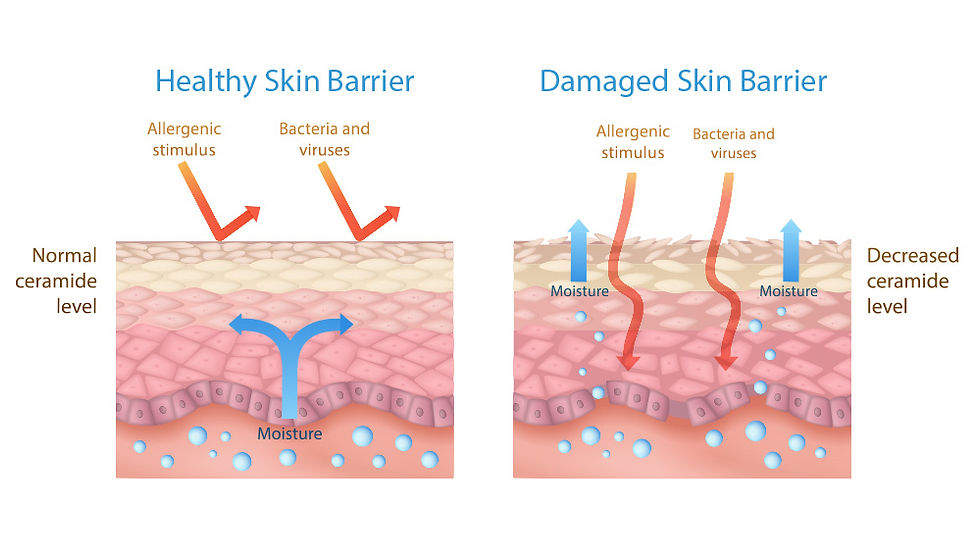
Your skin's outermost layer — the barrier — is a thin wall of skin cells held together by lipids, often described as "bricks and mortar."
Its job is simple but vital: keep moisture in, and keep irritants, bacteria and the outside world out.
When that barrier is intact, your skin is resilient. It tolerates actives. It holds onto hydration. It stays calm.
When that barrier is compromised, everything changes.
Water escapes through the skin faster than it should, leaving it dehydrated no matter how much you apply. Irritants get in more easily. And the nerve endings underneath become more reactive — which is why a damaged barrier stings, burns, flakes and reddens at the smallest provocation.
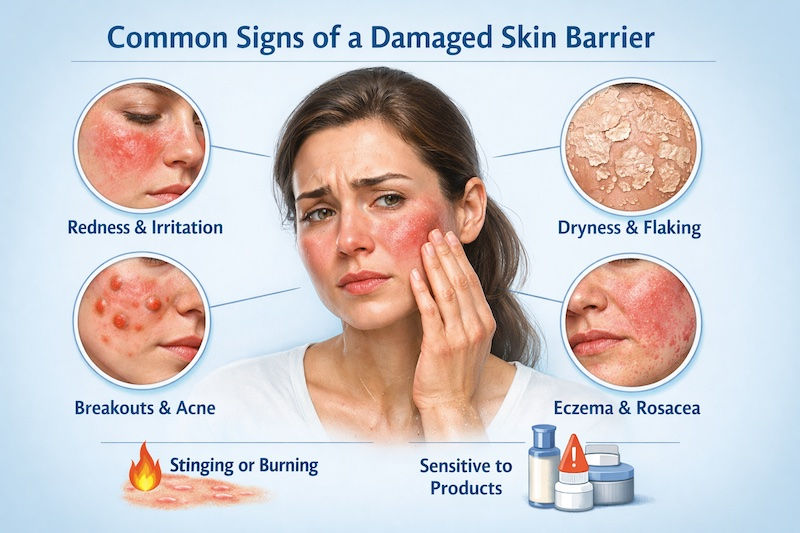
How a Barrier Gets Damaged
It's rarely one thing. The usual suspects:
Over-exfoliation — too many acids, too often
Active overload — stacking retinol, vitamin C, AHAs and BHAs at once
Harsh, high-pH cleansers that strip the skin's natural oils
Environmental stress — sun, wind, heating, air-con, load-shedding-cold-then-hot
Life — stress, illness, hormones, lack of sleep
Sound familiar? If your skin is in a reactive, sensitive, over-exfoliated state right now, adding more treatment is adding fuel to a fire.
Why Treating a Damaged Barrier Backfires
Active ingredients work by creating controlled change in the skin — exfoliating, increasing cell turnover, stimulating collagen. On healthy skin, that's exactly what you want.
On a damaged barrier, that same "controlled change" lands on skin that has no defences left. The result is irritation, sensitisation, and often the very problems you were trying to fix — more redness, more breakouts, more uneven tone. You end up treating the damage caused by treatment.
This is the trap. And the way out of it is almost counter-intuitive: you STOP, and you CALM.
Calm First. Treat Later. This Is the Korean Way.
The reason Korean skincare consistently produces that healthy, lit-from-within "glass skin" look isn't a secret 10-step ritual. It's a philosophy: barrier first, actives second, protection always.
You repair the wall before you renovate the house. Once the barrier is strong, calm and hydrated, your skin can finally tolerate — and actually benefit from — the treatment steps you wanted all along.
That's the exact thinking behind our Calm & Reset Skin Kit.
The Calm & Reset Skin Kit: A Reset Button for Reactive Skin
This kit is built around one principle — heal the skin barrier first, treat everything else later. No actives. No acids. No retinol. Just a complete, gentle, 7-step Korean routine designed to calm inflammation, restore hydration and rebuild your skin from the inside out.
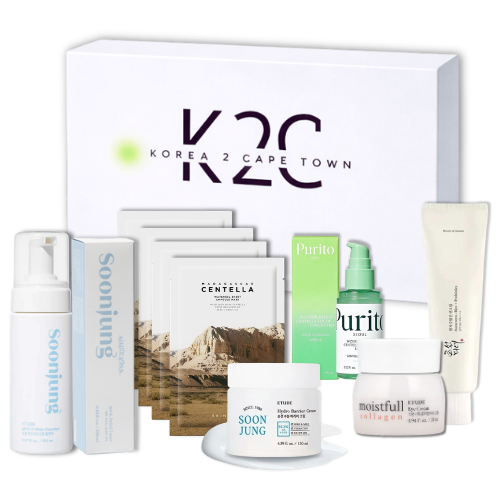
What's inside, and why each step earns its place
ETUDE SoonJung pH 6.5 Whip Cleanser — a low-pH, low-irritant cleanse that removes the day without stripping the barrier. The opposite of the squeaky-clean feeling that quietly damages skin.
ETUDE SoonJung 5.5 Toner — pH-balanced and soothing, it preps the skin and starts rehydrating immediately.
PURITO Centella Serum — concentrated centella asiatica (cica), one of the most researched soothing ingredients in skincare, known to calm inflammation and support the skin's own healing.
ETUDE SoonJung Hydro Barrier Cream — seals everything in and reinforces the moisture barrier so water stops escaping.
ETUDE Moistfull Collagen Eye Cream — gentle hydration for the most delicate, easily-irritated skin on your face.
5× SKIN1004 Centella Watergel Sheet Masks — a weekly flood of centella and hydration. One a week, for four weeks, to compound the calming effect.
Beauty of Joseon Relief Sun SPF50+ PA++++ — non-negotiable. A healing barrier needs protection from UV every single morning, or you undo the work.
Together, that's not seven random products — it's a curated system for skin in a sensitive, reactive, dehydrated, over-exfoliated or barrier-damaged state. Most people notice less redness, more hydration and calmer skin within 2 to 4 weeks.
When You're Ready to Treat — We've Got You
Calming isn't the destination. It's the foundation. Once your barrier is strong and stable, your skin is ready for targeted work — and that's where the rest of the K2C system comes in:
Acne Reset Kit — for breakout-prone, congested, inflamed skin
Pigmentation Correction Kit — for dark spots, uneven tone and post-acne marks
Optimise & Maintain Kit — for balanced, early-ageing skin ready for controlled actives
Each one meets your skin in the state it's actually in — not the type you were once told you are.
Not Sure If Your Barrier Needs Resetting?
If your skin stings, burns, flakes, feels tight, or reacts to products it used to love — your barrier is likely asking you to slow down, not speed up.
You don't have to guess. Take the K2C Skin Quiz — a few quick questions, and we'll tell you exactly which kit your skin is in the state for.
Calm first. Treat later.
That's how real, lasting skin transformation actually works.
Love always,
Mieke💚😉

korea2capetown.co.za — Authentic Korean skincare. Skin state philosophy. Real results, delivered across South Africa.


Comments