.png)
.png)
How to Clear Acne Without Wrecking Your Skin Barrier: A Science-Backed Guide

Acne explained by the science — what really causes breakouts, why "more products" makes it worse, and how to clear acne without damaging your skin barrier, the Korean way.
If you've spent years fighting breakouts, you already know the pattern. A spot appears. You attack it — a stronger scrub, a harsher wash, a spot gel, maybe three actives at once. For a few days it feels like progress. Then your skin gets tight, red, flaky… and somehow more breakouts arrive.
You're not doing it wrong because you're lazy. You're doing it wrong because almost everything you've been told about acne is built around one idea: attack the skin harder. And that's exactly the approach the science says backfires.
Let's fix that — properly, the way the research actually supports.
What Acne Actually Is (The Real Science)
Acne vulgaris isn't "dirty skin." Dermatology research consistently describes it as a chronic inflammatory condition of the pilosebaceous unit — the tiny structure where your hair follicle meets an oil gland. Four drivers work together to create a breakout:

Too much sebum (oil). Often pushed by hormones, especially androgens.
Clogged pores (follicular hyperkeratinization). Skin cells inside the pore stick together instead of shedding cleanly, forming a plug.
Bacteria. Cutibacterium acnes (you may know it as P. acnes) overgrows inside that clogged, oily, oxygen-poor pore.
Inflammation. Your immune system reacts — and that's the redness, swelling, and soreness you can see and feel.
The critical point: these four factors feed each other. That's why a single "magic" product rarely works for long, and why blasting one factor (usually the bacteria, with something harsh) while ignoring the others just shifts the problem around.
So why does "more products" make it worse?
Here's the part the internet skips. Your skin has a protective barrier — the outermost layer that holds moisture in and irritants out. When you over-cleanse, over-exfoliate, or pile on strong actives, you damage that barrier. Dermatology measures this as transepidermal water loss (TEWL) — water escaping through a compromised barrier — and high TEWL is repeatedly linked to acne, sensitivity, dryness, and inflammation.
The cycle looks like this:
Harsh routine → damaged barrier → water escapes → skin becomes dehydrated and inflamed → skin panics and pumps out more oil to compensate → more clogged pores → more breakouts.
You end up with skin that is somehow oily and stripped, broken out and irritated. Sound familiar?
This is the single most important thing to understand about acne: you cannot strip your way to clear skin. You have to clear breakouts and protect the barrier at the same time. That balance is the entire philosophy behind the K2C Acne Reset Kit — clear, controlled, calm. Never stripped.
What Causes Acne? (Including the Things Nobody Tells You)
Hormones
Androgens drive oil production, which is why breakouts often flare in the teens, around your cycle, with stress, and during hormonal shifts. Persistent acne along the jaw and chin in adult women is frequently hormonal — and worth a conversation with your GP or dermatologist alongside a good topical routine.
Stress
Stress doesn't create acne out of nothing, but it amplifies the inflammatory side of it. The emerging research treats acne as partly systemic — gut, stress, and immune signalling all feed into how reactive your skin is.
Diet
This one is nuanced, and honesty matters here. Systematic reviews link high-glycaemic-load diets (sugary drinks, white bread, refined carbs) to a modest but real increase in breakouts, likely through insulin and oil production. The dairy link is more inconsistent and seems to depend on the individual. Diet is a lever, not a cause — worth experimenting with, not worth panicking over.
The routine itself
For a huge number of people, the biggest acne trigger is their own over-treatment. If your skin stings when you moisturise, feels tight after cleansing, or looks shiny-but-flaky, your barrier is asking for help — not more acids.
How to Actually Clear Acne: A Controlled, Barrier-First System
Every product below earns its place because it targets one of the four acne drivers without damaging your barrier. This is a curated system where every product has a job — not a pile of random actives. Here's the logic, and the K2C product that does each job.
Step 1 — Cleanse without stripping (double cleanse, done gently)
The fix for oil and buildup isn't a squeaky-clean, tight feeling — that's barrier damage. It's a gentle double cleanse at night.
An oil-based cleanser dissolves sebum, SPF, and the day's buildup that water alone can't shift. The Banila Co Clean It Zero Pore Clarifying Cleansing Balm does exactly that, then rinses clean. Follow it with the ETUDE SoonJung pH 6.5 Whip Cleanser — a low-pH, panthenol-rich gentle wash from a clinical-sensitive line, so you remove the day without dismantling your barrier.
(Mornings: just the SoonJung cleanse. One cleanse is enough.)
Step 2 — Unclog pores with controlled exfoliation
Clogged pores (driver #2) need exfoliation — but the kind you can sustain, not the kind that triggers the damage cycle. The SOME BY MI AHA·BHA·PHA 30 Days Miracle Toner combines three acid types: AHA works on the surface, BHA gets into the pore to clear the plug, and PHA is the gentle, large-molecule acid that exfoliates with far less irritation. The matching SOME BY MI AHA·BHA·PHA Miracle Cream continues that work while supporting the skin.
The clinical rule (this matters): start the toner once a day, ideally at night, and build up to twice daily only after about two weeks. Acids done slowly transform skin. Acids done all-at-once cause the exact barrier damage we're trying to avoid.
Step 3 — Calm oil and inflammation (the quiet hero)
If acne could only have one daily active, niacinamide would be a serious contender. It works on multiple acne drivers at once: clinical studies show 2–5% niacinamide measurably reduces sebum, and a 2024 research review found that at higher strength its anti-inflammatory effect was comparable to a common prescription antibiotic gel — without antibiotic resistance concerns. It also helps rebuild the barrier through ceramide production and fades the dark marks left behind by old spots.
The Beauty of Joseon Glow Serum pairs niacinamide with propolis — a bee-derived ingredient with well-documented anti-inflammatory and antimicrobial activity. Oil control, calming, and barrier support in one gentle layer.
Step 4 — Treat active breakouts (without picking them)
For the angry, raised spots, you have two evidence-backed tools in this kit.
Tea tree. A landmark randomised trial found 5% tea tree oil reduced acne lesions about as effectively as 5% benzoyl peroxide — the long-standing gold standard — with fewer side effects, though it acts a little more slowly. The MISSHA Airy Fit Tea Tree Sheet Mask delivers that calming, antibacterial action once a week, with zero harshness.
Hydrocolloid spot patches. These are quietly brilliant and very well-evidenced. A 2024 randomised controlled trial in the Journal of the American Academy of Dermatology found hydrocolloid patches significantly improved a popped spot's appearance within a day, and a 2025 trial reported roughly a 35% reduction in lesion size and 44% improvement in severity by day two. They create a moist wound-healing environment, draw out fluid, reduce post-spot marks — and crucially, they physically stop you picking (which is what turns a spot into a scar). The PURITO Wonder Releaf Centella Spot Patches give you 51 patches of exactly this, with soothing centella built in.
Step 5 — Protect (the step that decides whether any of this works)
This is non-negotiable, and it's where most acne routines quietly fail. Exfoliating acids and active ingredients increase your skin's sun sensitivity, and UV exposure makes post-acne marks darker and longer-lasting — a particular concern for deeper skin tones, which scar and pigment more readily. Skip SPF and you undo the work every single day.
The Beauty of Joseon Relief Sun SPF50+ finishes every morning: high protection, weightless, and gentle enough to wear over broken-out skin without clogging.
Putting It Together: The Acne Reset Routine

Morning: SoonJung cleanse → Miracle Toner → Glow Serum → Miracle Cream → SPF50+ Night: Banila Co oil cleanse → SoonJung cleanse → Miracle Toner → Glow Serum → Miracle Cream → spot patch as needed
Weekly: Tea Tree sheet mask on a calm night
Clear the pores. Calm the inflammation. Support the barrier. Protect from the sun. Every driver of acne, covered — and your skin barrier protected the whole way through. That's why it's called a reset, not an attack.
The full Acne Reset Kit brings all eight products together as one system, with a clear AM/PM routine so there's no guesswork.
How Long Until You See Results?
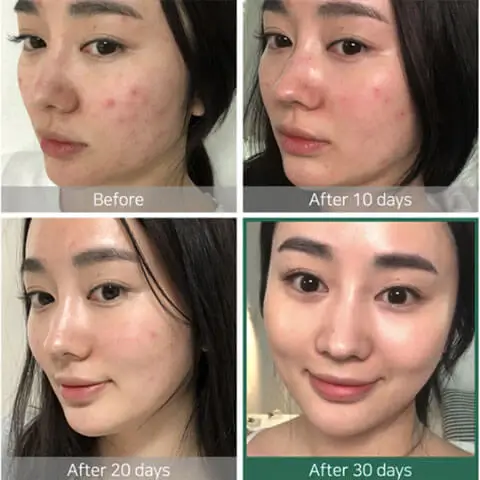
Be patient — real skin change is biological, not overnight. With consistent niacinamide and gentle exfoliation, most people notice less congestion within about two weeks and visibly clearer skin around four to eight weeks. The spots that respond fastest are the ones you patch; the deeper, calmer transformation comes from the daily routine doing its quiet work without setbacks. The fastest route to clear skin is a routine you don't have to keep recovering from.
When to See a Professional
Skincare manages most mild-to-moderate acne beautifully. But if you have deep, painful, cystic acne, scarring, or breakouts that aren't shifting after a few consistent months, please see a GP or dermatologist — some acne needs prescription support, and there's no shame in that. A great routine and medical care work together, not against each other.

Frequently Asked Questions
What actually causes acne?
Four things working together: excess oil, clogged pores, C. acnes bacteria, and inflammation — often driven by hormones, and worsened by a damaged skin barrier from over-treating.
Why does my acne get worse when I use more products?
Because harsh, layered actives strip your skin barrier. That increases water loss and inflammation, which makes your skin produce more oil and break out more. Clearing acne is about controlled treatment plus barrier support — not maximum aggression.
Is Korean skincare good for acne?
Yes — because the Korean approach prioritises the skin barrier first and uses gentle, controlled actives instead of stripping the skin. That's exactly the balance acne-prone skin needs.
Does diet cause acne?
Diet is a lever, not a single cause. High-glycaemic-load foods (sugar, refined carbs) are linked to more breakouts; the dairy link is less consistent and varies person to person.
Can I use this kit if my skin is also sensitive or very irritated?
If your barrier is already compromised and inflamed, you may need to calm it before introducing acids. Take the K2C Skin Quiz — it reads what your skin is dealing with right now and matches you to the right starting point, so you don't pour acids onto an already-stressed barrier.
Not Sure If Acne Is Your Skin's State Right Now?
Your skin state changes with hormones, season, and stress. Before you buy anything, let your skin tell you what it needs.
Take the free 2-minute K2C Skin Quiz — and we'll match you to the exact kit for the state your skin is in today.
Or explore the Acne Reset Kit and clear your skin the way the science actually supports — controlled, calm, and barrier-first.built.
Love always,
Mieke💚

Authentic Korean skincare. Skin state philosophy. Real molecules. Real results — delivered to South Africa.
This article is for general education and isn't a substitute for medical advice. For persistent, severe, or scarring acne, please consult a doctor or dermatologist.


Wonderfully informative! Thank you